
/0x1004:6048x3020/prod01/channel_8/media/studio-sites/innovation-and-entrepreneurship-program/20251120-Mayo-074.jpg)
What Participants Cover
The curriculum spans the practical knowledge required to operate at the intersection of medicine, business, and innovation. Topics include:
- Artificial intelligence in healthcare
- The business of medicine
- Healthcare at home
- Technology implementation
- Mayo Clinic Platform
- Business model testing
- Industry collaborations
- Funding mechanisms
Who This Is For
The Academy is built for late-stage medical trainees who envision a career shaping the future of healthcare, not only practicing within it.
The ideal participant is a resident or fellow nearing the completion of training who intends to pursue a long-term staff position and to drive change from within it. That change can take many forms: developing new technology, leading a department, launching a venture, reshaping care delivery, or standing up new service lines. What candidates share is intent and readiness to lead.
The Academy is well suited for trainees who:
- Aim to advance medical care through technological innovation, new business models, or commercialization
- Envision careers in departmental leadership, including chair or director roles
- Plan to pioneer new approaches in healthcare education or training
- Wish to operate at the intersection of medicine, business, and industry
The program is selective by design. The mentorship, relationships with senior healthcare leaders, and depth of engagement that distinguish the Academy depend on a small, committed cohort. The level of access offered is most meaningful when extended to participants prepared to make full use of it.
How We Teach
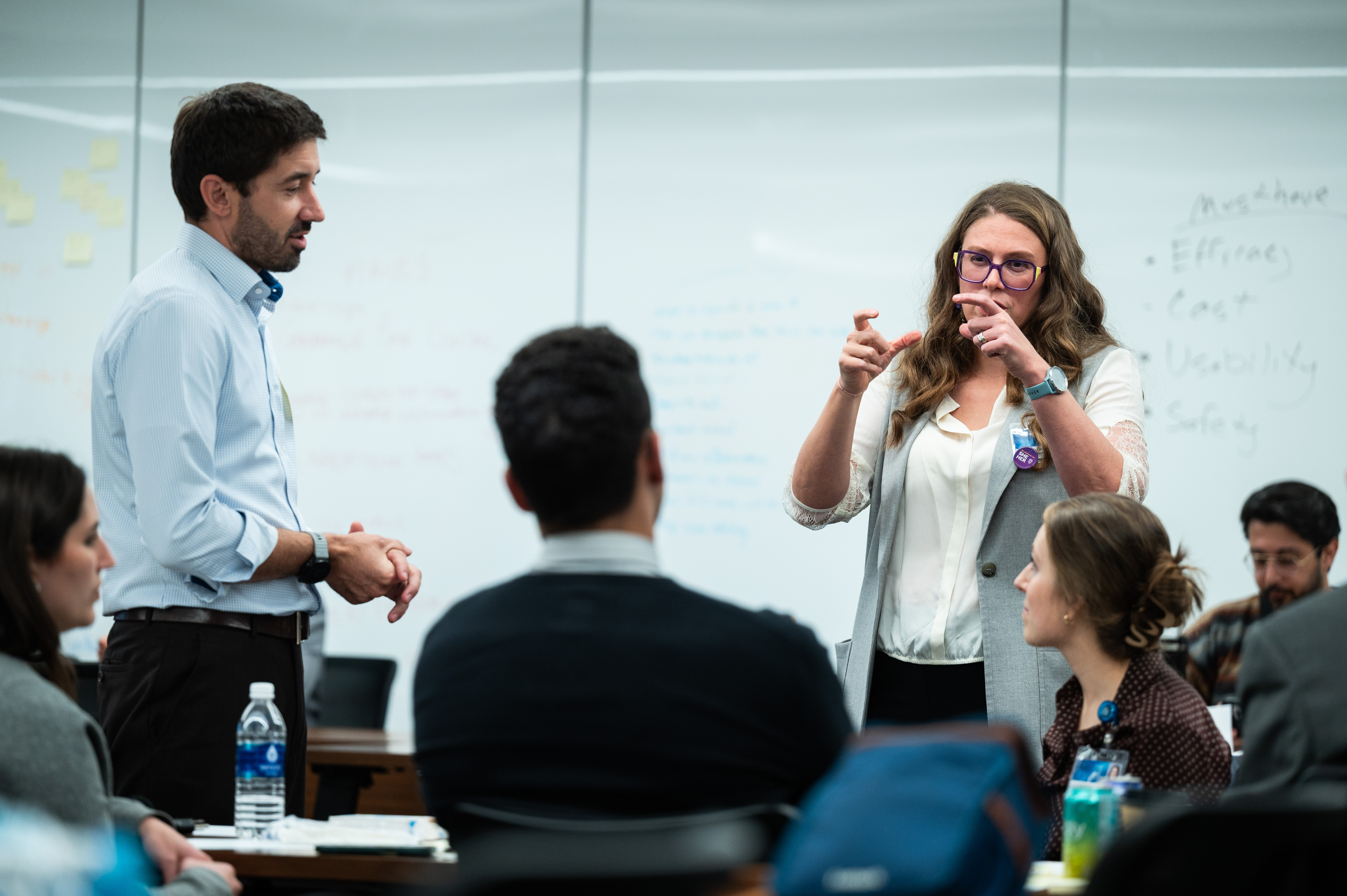
Innovation cannot be lectured into someone. Reading about entrepreneurship is not the same as practicing it. The Academy is built around hands-on, experiential learning in which participants engage with the material directly rather than absorb it passively.
Three principles distinguish the experience.
Workshop, not lecture. Sessions are designed for active participation. Concepts are introduced and immediately applied. Problems are drawn from participants’ own clinical environments or from cases brought by faculty. Participants leave each session having practiced something, not simply heard about it. Interactive problem-solving and direct implementation are the rule; passive presentation is the exception.
Faculty who do the work. Sessions are led by: practitioners healthcare innovators, business leaders, and industry partners actively building, investing, advising, and operating in the space. Their teaching is grounded in current practice rather than historical case studies.
Sustained access to senior leadership. This access distinguishes the Academy from comparable programs. Participants engage directly with established healthcare executives, founders, and industry partners through structured sessions and ongoing mentorship. These relationships extend well beyond the program itself, forming a professional network that supports participants throughout their careers as collaborators, advisors, and partners in future work.
